Cultural & Natural Heritage

The History & Living Nature of Japan's Trails

Every trail tells a story thousands of years in the making — pilgrim footsteps, feudal post stations, ancient cedar forests, and ecosystems found nowhere else on Earth.

Pilgrimage Routes

Sacred Paths: Japan's Ancient Pilgrimage Networks

For over a thousand years, Japanese pilgrims have walked forest tracks, mountain passes, and coastal cliffs to reach sacred shrines and temples. These ancient routes form the backbone of Japan's walking trail heritage.

The Kumano Kodō of the Kii Peninsula is perhaps the world's most evocative pilgrimage trail — a UNESCO World Heritage network of paths converging on the three Kumano Grand Shrines. Emperors, nobles, and common people alike have walked these misty cedar corridors since the 9th century, seeking purification, healing, and spiritual transformation.

"The road to Kumano is not a path through the forest — it is a path through the self."

— Traditional pilgrim saying, Kii Peninsula

The Shikoku 88 Temple Pilgrimage (Ohenro) is Asia's longest established pilgrimage circuit — 1,200 kilometres encircling Shikoku Island in the footsteps of the Buddhist monk Kūkai (Kōbō Daishi). Today, roughly 100,000 pilgrims walk or drive the route each year, identifiable by their white jackets (hakui) and pilgrim staffs (kongōzue).

The Nakasendō — the "Central Mountain Road" — is a former feudal highway connecting Edo (Tokyo) to Kyoto through the Japan Alps. Between Magome and Tsumago in the Kiso Valley, an exquisitely preserved 8-kilometre stretch of stone-paved path and traditional post towns offers walkers the most tangible connection to Edo-period travel in Japan.
Kumano Kodo Shikoku 88 Nakasendo UNESCO Heritage Kii Peninsula
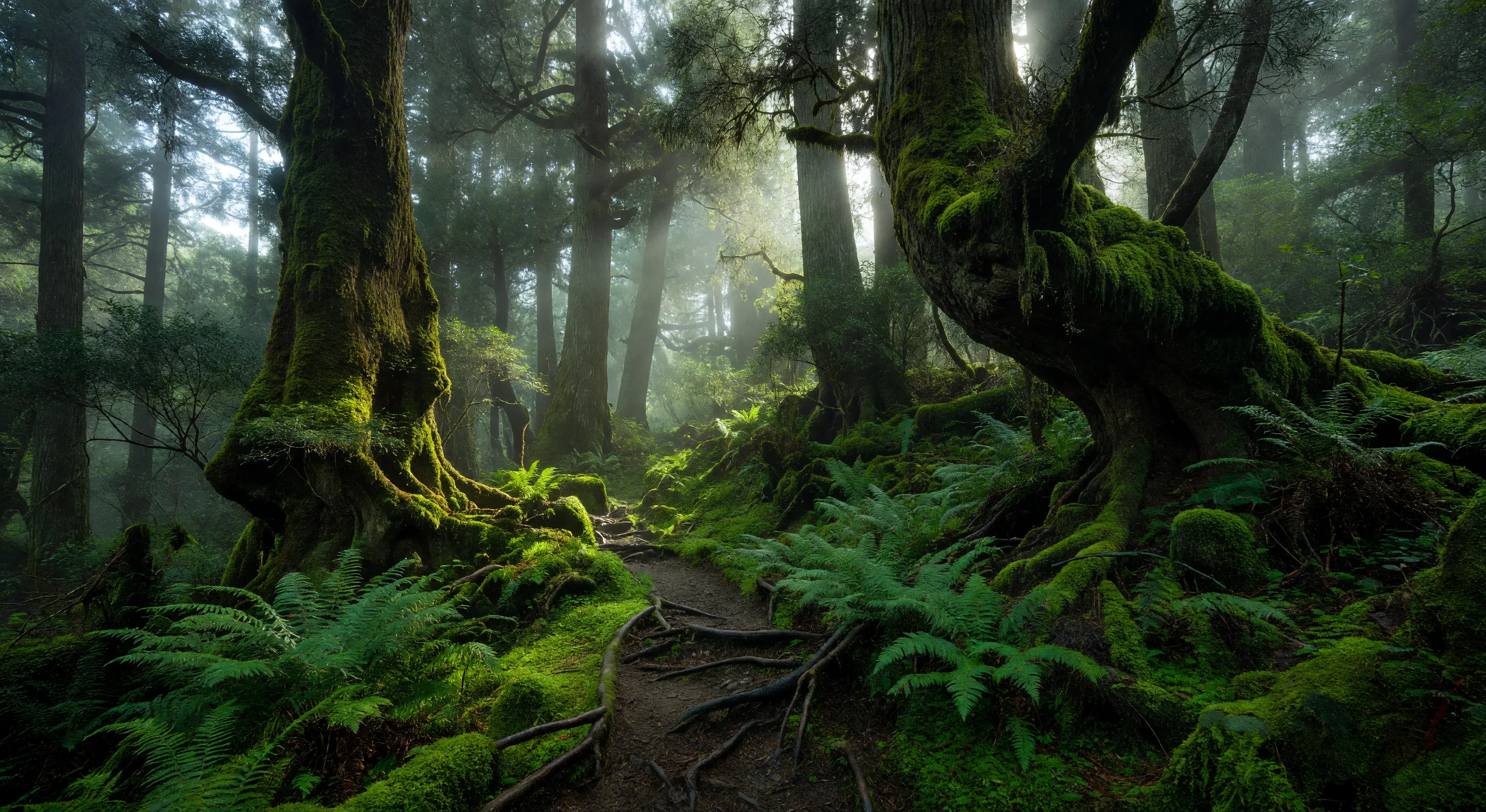
Yakushima ancient forest — primordial trail environment
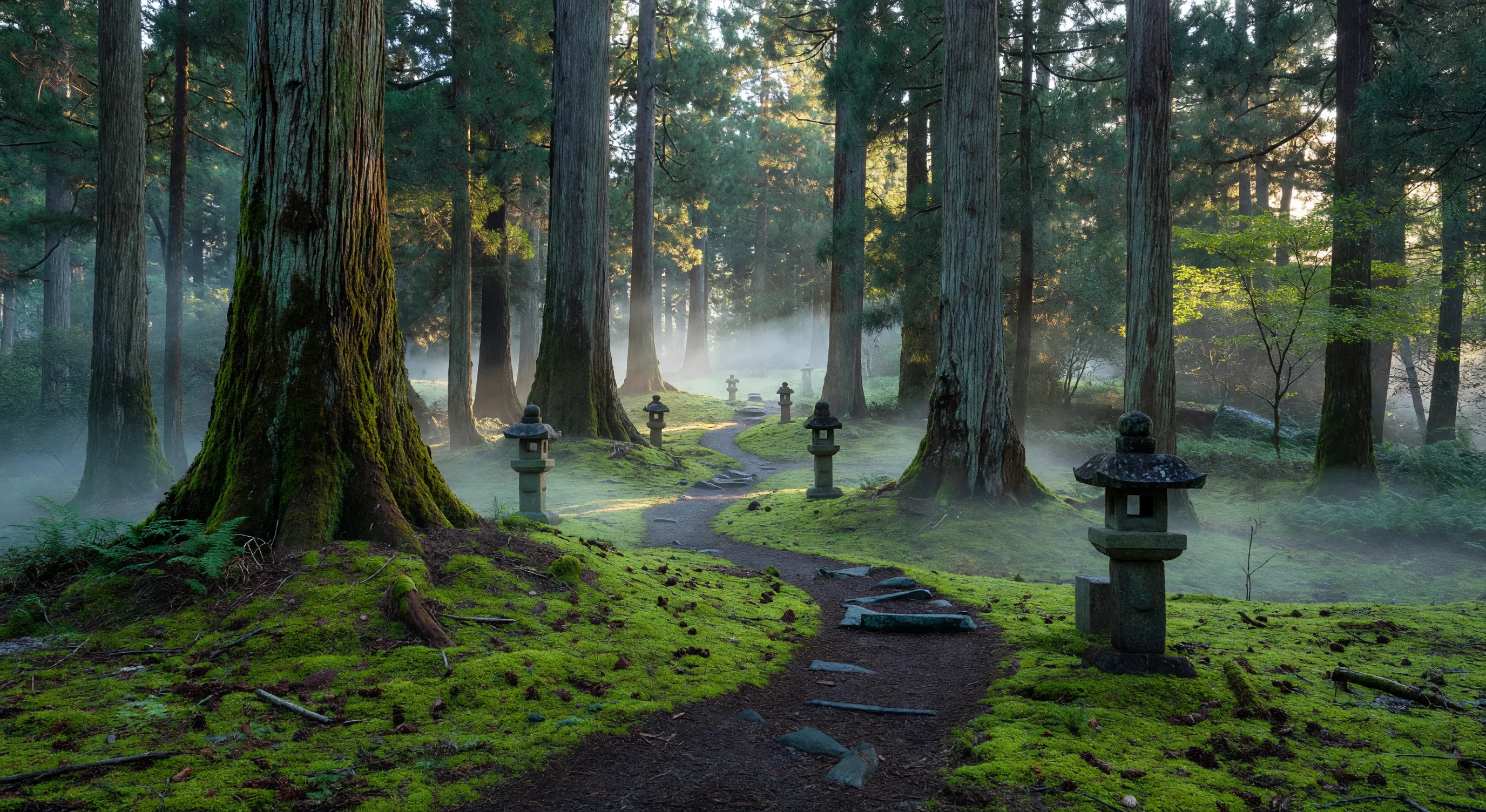
Nikko cedar avenue — Japan's most famous post road approach
Edo Period Roads

Five Great Roads: The Gokaidō Highway System

The Edo Shogunate's network of five great highways (Gokaidō) created the infrastructure that unified feudal Japan — and gave modern walkers 400 kilometres of preserved walking history.

Constructed and maintained from 1600–1868, the Gokaidō roads radiated from Edo (modern Tokyo) to serve the dual purpose of military control and commerce. Daimyō lords were required to spend alternate years in Edo, creating the enormous processions that kept the roads active and the post towns (juku) thriving.

The most walkable sections today are along the Nakasendō (particularly the Magome–Tsumago section) and the Tōkaidō coast road, where original stone pavings, cedar-lined approach roads, and well-preserved honjin inns bring the Edo era back to life under your feet.

The approach avenue to Nikkō Tōshō-gū Shrine features Japan's most spectacular post-road cedar avenue — 35 kilometres of cryptomeria planted in 1625 by the feudal lord Matsudaira Masatsuna. Roughly 13,000 trees survive today, many reaching 30 metres in height, creating one of Japan's most dramatic walking corridors.

"Along the Nakasendō, you walk not merely on stone — you walk on the accumulated footsteps of merchants, samurai, courtesans, and emperors."

— Simple Workout Club Research Team
Nakasendo Tokaido Magome-Tsumago Nikko Cedar Avenue
Ancient Forests

Japan's Old-Growth Forests & Sacred Groves

Japan's forests cover 68% of the land area — one of the highest percentages of any industrialised nation. Trail walkers encounter ecosystems ranging from subtropical mangrove to subarctic birch, each with a distinct biological character shaped by millions of years of island evolution.

Yakushima primeval forest trail
UNESCO Site

Yakushima Primeval Forest

The island of Yakushima receives over 10,000mm of rain annually — making its forest so thick with moss that the Japanese say "moss grows on the moss." The Jōmon Sugi cedar, estimated at 2,170–7,200 years old, is its most ancient resident. The island's vertical range from subtropical coast to 1,935m summits compresses entire climate zones into a single day's walk.

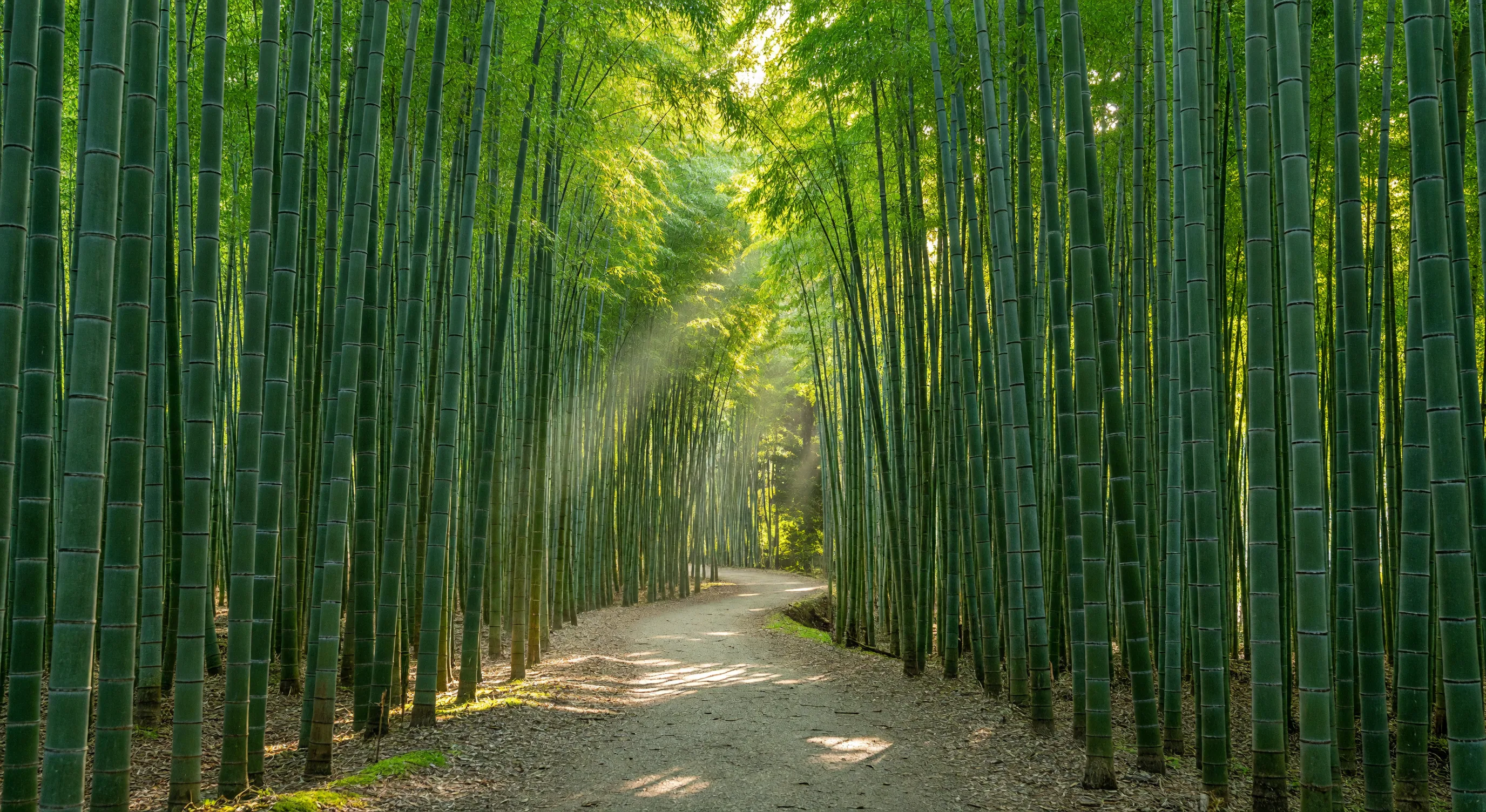
Arashiyama bamboo grove Kyoto
Cultural Forest

Arashiyama Bamboo Groves

Bamboo (take) holds profound cultural significance in Japan — a symbol of resilience, purity, and the ephemeral. The Arashiyama groves are among Asia's finest, where towering Moso bamboo filters light into an eerie green luminescence and creates one of the world's most distinctive acoustic environments: the rustling of bamboo in wind is listed as one of Japan's "100 Soundscapes."

Nikko sugi cedar trees ancient grove
Monumental Forest

Nikkō Cedar Avenues

Japanese cedar (Cryptomeria japonica — sugi) is the national tree of Japan, found in planted groves and natural stands across the archipelago. The Nikkō avenue represents the deliberate intersection of cultural monument and living forest — where the avenue's 400-year-old giants function simultaneously as sacred approach road, ecological corridor, and national heritage site.

Historical Timeline

A Thousand Years of Japanese Trail History

Key moments in the making of Japan's extraordinary walking heritage.

9th Century AD

Kumano Pilgrimage Established

Emperor Uda makes the first recorded imperial pilgrimage to the Kumano Grand Shrines (907 AD), establishing a route that subsequent emperors, nobles, and commoners would walk for centuries. The Nakahechi (Imperial Road) becomes the primary corridor through the Kii Peninsula cedar forests.

774–835 AD

Kūkai & the Birth of the Shikoku Ohenro

The Buddhist monk Kūkai (posthumously Kōbō Daishi) walks Shikoku in pursuit of enlightenment, stopping to meditate at locations that will become the 88 temples of the Shikoku Pilgrimage — Asia's longest established walking circuit at 1,200 kilometres.

1603–1868

Edo Period — The Gokaidō Highway Network

The Tokugawa Shogunate builds and maintains five great highways connecting Edo (Tokyo) to the regional capitals. Post towns (juku), tea houses (chaya), and cedar avenues transform Japan's landscape into a walking infrastructure of extraordinary completeness — much of which survives to this day.

1993

Yakushima — Japan's First UNESCO Natural Heritage Site

The island of Yakushima is inscribed on UNESCO's World Heritage List in recognition of its primeval Cryptomeria and Rhododendron forests — the first natural heritage listing in Japan. The designation accelerates protection of ancient trail corridors through the old-growth forest.

2004

Kumano Kodō Achieves UNESCO Status

The Kumano Kodō becomes the world's only trail network sharing UNESCO dual World Heritage recognition with a non-Asian pilgrimage path — Spain's Camino de Santiago. The designation transforms international awareness of Japan's walking heritage and triggers a new era of trail preservation.

2026

Simple Workout Club — 2026 Edition

Our comprehensive 2026 trail guide documents over 200 routes across all 47 prefectures, combining historical scholarship, ecological research, and firsthand walking experience to create Japan's most complete walking resource.

Wildlife on the Trail

Japan's Trail Wildlife

Japan's island geography has created unique endemic species found nowhere else. Trail walkers encounter remarkable fauna on everyday routes.

🦌

Japanese Sika Deer

Sacred deer of Nara freely roam the forest trails of Kasugayama — regarded as divine messengers of the Shinto shrines.

Kansai / Nationwide
🐒

Japanese Macaque

The world's northernmost monkey species bathes in geothermal hot springs in Nagano. Commonly spotted on Joshinetsu highland trails.

Nagano / Tohoku
🦅

Steller's Sea Eagle

One of the world's largest eagles, wintering on Hokkaido's frozen lake edges. Spectacular encounters on the Akan National Park trail circuit.

Hokkaido
🐢

Loggerhead Sea Turtle

Nesting on beaches adjacent to coastal trails in southern Japan. The Tosa Coast (Shikoku) offers guided dawn nest-watching walks in summer.

Pacific Coast / Kyushu
🦊

Hokkaido Red Fox

Japan's northernmost fox population has grown remarkably bold. Regular sightings on Hokkaido lake trails, particularly at dawn and dusk.

Hokkaido
🦉

Blakiston's Fish Owl

The world's largest owl, found only in Hokkaido. Dusk walks near river-edge forest trails offer rare opportunities to hear — and occasionally see — this legendary bird.

Hokkaido
🐟

Yakushima Flying Fish

Unique subspecies observed from coastal trail clifftops. The island's clear subtropical waters attract schools visible from elevated viewpoints above the sea.

Yakushima Island
🌸

Cherry Tree Species

Japan hosts over 600 cherry blossom varieties — from the common Somei Yoshino to rare mountain species found only on specific trail corridors in Shikoku and Tohoku.

Nationwide
Conservation

Protecting Japan's Trail Ecosystems

Many of Japan's most beloved trail corridors traverse ecosystems under significant pressure — from climate change, over-tourism, invasive species, and infrastructure development. Understanding conservation status helps walkers become responsible trail users.

Japan's National Park system protects 31 designated parks covering 5.8% of national territory. UNESCO Biosphere Reserves and World Heritage areas provide additional layers of protection for the most ecologically significant trail zones.

The principle of satoyama — the Japanese concept of the harmonious borderland between mountain wilderness and human settlement — guides trail management philosophy. Trails in satoyama landscapes are actively managed by local community groups who see trail maintenance as both ecological duty and cultural preservation.

Responsible Walking Guide →
31National Parks
5.8%Land Protected
4UNESCO Natural Sites
68%Forest Coverage
Yakushima protected forest trail ecosystem